Whether you’re a North Carolina resident, a visitor driving through, or a lawyer advising clients on firearm transport issues, understanding the rules around guns in vehicles is critical. North Carolina’s laws are specific, and breaking them—even by accident—can lead to criminal charges, fines, and serious consequences. This article breaks it all down in plain English, with helpful examples so anyone can follow.
General Framework: Can You Have a Gun in Your Car in North Carolina?
Yes — But With Rules
North Carolina does allow people to have guns in their vehicles, but the key is how the gun is carried and whether you have the right permit.
The law makes a fundamental distinction between:
- Open carry — firearm is visible and not hidden, and
- Concealed carry — firearm is hidden from ordinary view.
If a firearm is concealed in a vehicle and readily accessible, that counts as carrying a concealed weapon under state law and requires a valid permit.
Everyday User View: What You Need to Know
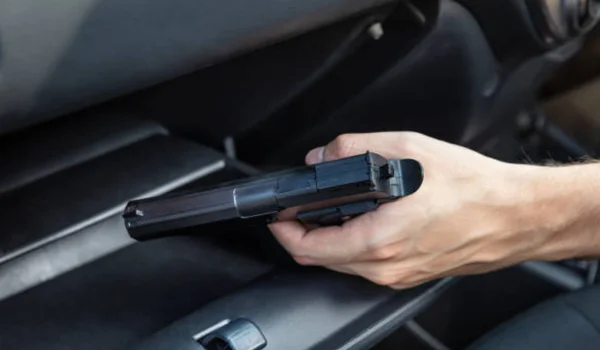
Let’s put the law into simple terms most people can use.
- If You Don’t Have a Concealed Carry Permit
If you do not have a North Carolina Concealed Handgun Permit (CHP), here’s what you can and can’t do:
✔ What You Can Do
- Have a firearm visibly in the car: A handgun or long gun can be placed where someone walking up to the car can clearly see it — for example, on the front seat or dashboard.
- Lock it away in the trunk or a locked container: Even if it’s not visible, if it’s in the trunk or a securely locked box that people inside the car cannot access, that’s generally legal.
❌ What You Can’t Do
- Put a gun under a seat, inside a closed but unlocked center console, or in a glove box: These are considered concealed and readily accessible, which is illegal without a permit.
- Cover a gun so it can’t be seen (e.g., under a coat or in a bag), even if technically visible upon closer look — it’s still treated as concealed.
Imagine this scenario:
You’re driving home from a shooting range. You put your handgun under the front seat because it’s easier. That’s not allowed — police consider that “concealed” and you could be charged. Instead, either make it visible on the seat (not recommended for safety) or lock it in the trunk.
- If You Do Have a Concealed Carry Permit (CHP)
A valid North Carolina CHP changes the rules:
✔ You May:
- Keep a handgun in a closed console, glove box, or compartment inside the vehicle — this is treated as lawful concealment with a permit.
- Carry the firearm concealed on your person, such as in a holster under a coat or in a bag, just like anywhere else you are legally allowed to carry.
However, a CHP doesn’t make you immune from all rules. You still must follow special location restrictions (more on those below).
Open Carry vs. Concealed Carry in Cars
Let’s compare what these terms mean for folks in vehicles:
Open Carry (No Permit Required)
- The firearm must be visible and not hidden in a way that would surprise an approaching person.
- Example: Long gun on the back seat, visible.
- Even without a permit, this form of carry is okay.
Concealed Carry (Permit Required)
- Firearm is hidden from ordinary view — whether in your person or inside certain compartments of the car.
- Example: Pistol in a closed glove box or console, locked, and you have a permit.
When Location Matters: Special Places You Can’t Carry
Even if your firearm is lawful in your car, where you go with that car can create trouble:
- School Property
You generally cannot have a firearm—concealed or not—even in your car—on school grounds (including parking lots).
- Government Buildings
Places like courthouses, legislative offices, and some state buildings are off-limits unless stored locked and inaccessible inside your vehicle and you follow permit-holder exceptions.
- Private Property with Posted No-Gun Signs
If a business or private property owner prohibits firearms (and posts it clearly), bringing a gun in your vehicle onto that property can be a violation—even if the gun is inside the car.
Pro Tip
Always check signage and local ordinances. Sometimes private businesses or city areas can impose restrictions beyond basic state rules.
What About Rifles and Shotguns?
The rules above apply primarily to handguns. But for rifles or shotguns:
- You can openly carry them in your car (i.e., visible on a seat or rack).
- Locked in a case or in the trunk is usually the safest way to transport them legally.
- Hiding them under a seat or in an unlocked bag can be treated as unlawful concealment — the same general idea as with handguns.
What Happens If You Break These Rules? Consequences
Violating North Carolina’s vehicle gun laws can lead to serious trouble:
Class 2 Misdemeanor
- Carrying a concealed firearm in a vehicle without a permit can lead to up to 60 days in jail and fines.
Worse Charges
- Repeat violations can bump the charge to higher misdemeanors or even felony charges, especially if other crimes are involved.
Felony Risks
- Transporting a firearm unlawfully with the intent to harm someone opens the door to felony prosecution.
Note for Lawyers:
Always evaluate whether the firearm was accessible, where it was stored, and whether a valid permit existed. Those details dramatically affect the severity of charges and defenses.
Tips for Everyday Drivers
Here are smart, practical tips for responsible firearm transport:
✔ Keep It Locked and Safe
- Even if visible carry is legal, consider locking the firearm in the trunk or secure case.
- This protects you, your passengers, and prevents theft.
✔ Always Know Where Your Firearm Is
- Leaving a gun under a seat or in an unlocked console — even by accident — could get you arrested.
✔ Inform Officers During Traffic Stops
- If a police officer stops you and a gun is visible, calmly inform them.
- This is not just good etiquette — it can protect you from misunderstandings.
✔ Get the Concealed Carry Permit
- If you travel often with firearms, a CHP makes storage and concealment much more flexible.
For Legal Practices: Key Takeaways
Whether advising clients or representing someone charged under vehicle gun statutes:
- Statutory Source: NC General Statute §14-269 and related provisions.
- Concealment is the linchpin — focus on whether the firearm was concealed and easily accessible.
- Permits matter: A valid CHP changes legal outcomes.
- Mandatory context: Where the car was parked (e.g., school property) can be dispositive.
- Charging decisions: Weigh whether the facts support Class 2 misdemeanor, higher charges, or exculpatory defenses.
Final Thoughts
North Carolina law is reasonably friendly to gun owners, but it draws a bright line at concealed carry without a permit. In vehicles that line often revolves around visibility and access.
Whether you drive every day with firearms for work, hunting, or personal defense, a little knowledge and cautious storage go a long way in staying on the right side of the law.
About the Author